


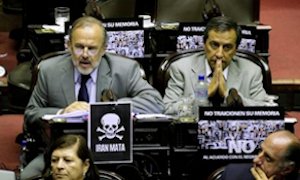
 Argentina has ratified a controversial memorandum of understanding with Iran to undertake a joint investigation into the 1994 AMIA Jewish community center terror attack which claimed the lives of 85 people and wounded hundreds. Following approval by the Argentine Senate last week, the Chamber of Deputies – the lower house of the Argentine Congress – on Wednesday night gave its backing to the deal. 131 lawmakers voted for and 113 against the deal, which has been strongly opposed by the local and international Jewish community.
The Argentine judiciary blames a number of high-ranking Iranian officials for organizing the biggest terrorist attack in the country's history. Among those it suspects of involvement in the bombing are former President Hashemi Rafsanjani and the current Defense Minister Ahmad Vahidi.
Members of the Argentinean Jewish community, the largest in Latin America, denounced the agreement as "unconstitutional," saying that it was designed "to whitewash the Iranian regime" and "to ensure that the attack's organizers go unpunished." Hundreds of protestors gathered in front of Congress in protest, holding up signs that read "No."
Latin American Jewish Congress President Jack Terpins labeled the agreement “a shame” and said it “causes offense to the families of the victims” of the AMIA attack and the Jewish community. Terpins told ‘Agencia Judía de Noticias’ that the agreement meant that Vahidi would now “be tried in the garden of his home.”
During the parliamentary debate, pro-government lawmakers and Foreign Minister Héctor Timerman, who is Jewish, vigorously defended the text, saying that it would help solve the AMIA bombing. Opposition legislator Ricardo Gil Lavedra said during the debate on the bill: "What kind of cooperation can we have with (Iran)? The bombing is being debated with the Iranian government, which ordered it."
Under the agreement, an independent ‘Truth Commission’ is to be set up to probe the bombing, which the Argentine government says will pave the way for eight Iranian suspects to be questioned by an Argentine judge. Iran, however, has insisted none of the suspects will be questioned, and Iran’s parliament has yet to approve the memorandum.


