


The Star, South Africa
27 August 2011
By Kevin Ritchie
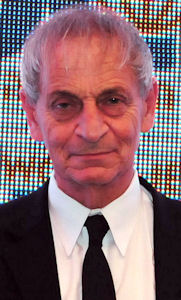
Michael Schneider once posed as a priest to smuggle ANC nurses across the border. Tonight he's back in South Africa as the former secretary general of the World Jewish Congress, speaking to the annual South African Jewish Board of Deputies conference at the Sandton Sun. Schneider was a member of the all-white African Resistance Movement (Arm) in the 1960s, whose member John Harris is forever remembered for setting the bomb that killed an elderly woman and maimed a little girl at Joburg's Park Station on 24 July 1964.
Harris was convicted and hanged. The only white resistance fighter to suffer this fate during the 40-year long armed struggle against apartheid. Schneider is still sad about it. "By the time John planted the bomb, we'd all been put in prison awaiting trial, were in jail serving sentences or had left the country. Someone gave him bad advice - unfortunately, the whole thing was flubbed and he paid a very harsh price for that advice."
Harris had planted the bomb and then phoned the authorities, but they never arrived in time. Schneider had fled to Swaziland three weeks before after the apartheid Security Police raids on the Arm earlier that year. He would spend six months there before sneaking back into South Africa and breaking out again through Botswana and from there to Zambia, both of which were still British colonies.
It was a surreal time. The South African police were after him and other activists; the British colonial authorities weren't overly sympathetic, but with the risk of him being kidnapped and smuggled back to face trial, Schneider was put in prison in Lusaka, to protect him.
Arriving in London eventually, where he received political asylum, he needed a job. "I was offered two, one at the Quakers community centre and the other at London Jewish Welfare Board, I took that one because it offered 75 (pounds) a year more. "The job launched me into Jewish communal work, everything flowed from there."
 From there he joined the American Jewish Joint Distribution Committee. Floundering in red tape, he volunteered for a posting to Iran and stepped straight into the Iranian revolution of August 1978. "I was evacuated out at the insistence of the British ambassador on board an old Lancaster bomber to Cyprus," he remembered this week, "then I was sent into Hungary as the director of the Joint Distribution Committee in Hungary and Yugoslavia in which we managed to negotiate an agreement with the communists that we could work with the Jewish communities providing welfare and relief".
He was so successful that he was eventually made chief executive of the committee and got the organisation back into the Soviet Union, 30 years after it had been expelled on trumped up charges as part of the infamous 'Doctors' Plot'. The committee's return provided succour to 250 000 impoverished and elderly Jews and when the Soviet Union started to fall, the committee ended up running a US agricultural department aid contract for desperate Russians too. As chief executive, Schneider also participated in Operation Solomon which airlifted 14 000 Jews out of Ethiopia to Israel as well as rescuing Jews from Iran, Syria, Yemen and Bosnia.
After retiring, Schneider became head of the World Jewish Restitution Organisation working around the globe to recover Jewish property and other assets stolen or confiscated by Nazi Germany and the USSR.
He retired for a second time, only to be made secretary general of the World Jewish Congress and overhaul it after it had been beset by internal strife and high profile scandals. Having successfully completed that task, he retired for a third and final time three weeks ago.
This weekend though he's back to speak about his days in Arm, to remind the delegates of the time he "borrowed" a school bus from King David High School and, armed only with a forged letter in the name of the then president CR Swart, purportedly authorising him to take the nurses out of the country, did just that. "When Tanzania became independent, the ANC decided to give a gift of 20 trained nurses smuggled out of the country. We picked them up in Sophiatown and handed them over in due course at Francistown in Botswana.
"Some of the nurses went on to marry Tanzanians, some of whom became cabinet ministers, and apparently even to this day there are nurses who still believe I was a real priest," he chuckles. But there was a serious side to the resistance too for the young man who had been born in Paarl and matriculated at Worcester Boys High before studying philosophy and English - like blowing up five railway signal boxes between Simonstown and Cape Town, which brought the commuter rail link to a standstill.
"Sabotage was decided by Mandela and we observed one strict code - no harm to individuals. Therefore it's unfortunate that the whole escapade resulted in someone (Harris) killing someone else."
Looking back, he still can't believe that South Africa was eventually liberated. "When we started out Arm activities, the idea of a free country was an absolute dream," he says, which is why he believes none of it was in vain. "Despite its problems, South Africa is still a success story today."


