


Israel, Jordan and the Palestinian Authority on Monday signed a water-sharing pact aimed at replenishing Dead Sea. Under an agreement a pipeline to carry brine from a desalination plant at the Red Sea to the Dead Sea will be built.
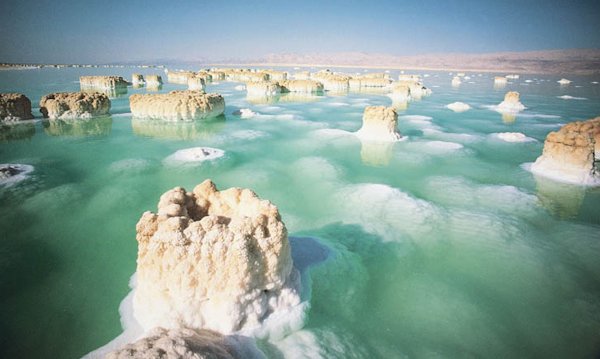 The Dead Sea is dropping by as much as a meter every a year as the River Jordan is depleted for use in irrigation. The project, which is estimated to cost somewhere between US$ 250 - 400 million, has been under discussion for years. Experts fear that the Dead Sea could dry up entirely by the year 2050.
Under the agreement, water will be piped from the Gulf of Aqaba off the Red Sea through a desalination plant in Jordan, sending brine to the southern-most edge of the Dead Sea. The brine will be used to test the impact of Red Sea water being transported to the Dead Sea, according to World Bank officials. It will involve the construction of a desalination plant in Jordan, projected to yield 80-100 million cubic meters of water annually.
Israel also plans to release more water from the Sea of Galilee, its largest reservoir, to Jordan, and sell desalinated water to the Palestinian Authority. The project will also yield hydroelectric power for use in the desalination process.
The agreement was signed by Israeli Energy Minister Silvan Shalom, the head of the Palestinian water authority Shaddad Attili, and Hazim el-Naser, head of the Jordan’s Water Ministry.
"I am pleased that the long-term engagement of the World Bank has facilitated this next step by the three governments, which will enhance water availability and facilitate the development of new water through desalination," Inger Andersen, the World Bank's vice president for the Middle East and North Africa, said in a statement.


